
The Paradox of Nostalgia and Self-Identity
On how nostalgia shapes our lives

If you've ever so much as glanced at one of my essays on this platform, if you've ever so much as browsed my Pinterest boards, if you've ever so much as read my notes or tweets, or checked my Spotify playlists, you would inevitably discover a pattern—a recurring sense of nostalgia that weaves through my persona. You would find me reminiscing, romanticizing my past, caught in the web of memories that tug at my heart. I find myself loving my present self, thankful for who I am becoming, and yet paradoxically believing that my old self was somehow better.
In every piece I write, in every board I curate, in every song I listen to obsessively, there’s an undercurrent of this reminiscing, endlessly replaying the same memories, savoring the sweetness of what has passed, while tasting the bitterness of being forced to move forward. It’s as if I’ve fell victim to a series of my own reflections, constantly looking back at myself, watching my back, and I’ve kept adding mirrors over and over again as time goes on. A series of reflections—a bunch of mirrors held up to a past I can’t quite let go of, a past that both comforts and haunts me. My life has become a constant act of looking back.
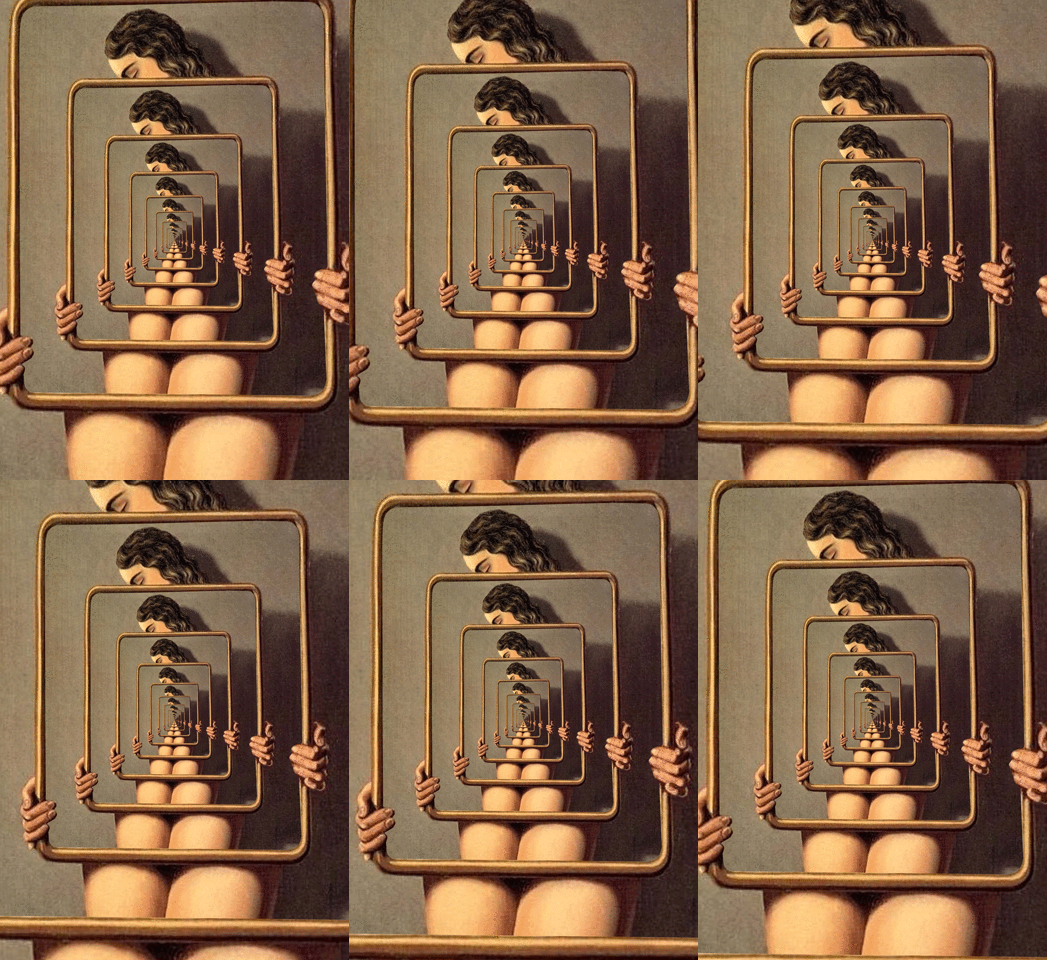
Each time I indulge in nostalgia, I wonder: am I trying to understand her, or am I hiding from the present—afraid to let go of the person I used to be? Am I afraid ?
The thing is, the past feels comfortable. Despite how cold or dark it may have really been at the time, those memories acquire a golden hue and a dreamy vignette effect as time passes, tricking your mind into believing, “Those were the good times.” But were they? They were not. You were a different person back then. The old you hadn’t endured as much as the you who stands here today. She shares the same background but hasn’t journeyed as far. While you should honor her for getting you to this point, you must not idealize her.
The way I see it, the perception of the past becomes so distorted that reminiscing often leads to an inaccurate narrative. Imagine having a specific memory you revisit constantly, wishing that moment could stretch on forever. You view it through the lens of your current self, one who has experienced everything that followed. Yet, the person who lived that moment was oblivious of what was to come. That’s precisely why you cherish it so deeply. If you could relive it now, with all your current life experiences, it wouldn’t be the same. You don’t just miss the memory; you miss the person you were then.
In those moments of nostalgia, it’s easy to forget that the past is gone, that it exists only in fragments and echoes. The truth is, the past is long gone; it shouldn’t haunt your present. It should be a part of you, a foundation from which you can build, rather than a weight that holds you back.
I spent my teenage years not only reminiscing my past, but also anticipating my future nostalgia, so I took pictures of everything. It gets addictive you know. What if I lose this or that friend? What if I change who I am and I betray her? What if I become everything I’ve ever hated? I remember every version of me. I remember every opinion I have once held and when. And I feel like I betray those versions of myself everytime I pay them a visit. I see it in the way I hold on obsessively to random, seemingly futile parts of my old lives. I don’t even enjoy them anymore, I just do them out of loyalty for me.
Having to watch so many different versions of myself alienates me from who I now am. I have thousands and thousands of pictures that I cannot look at, because each time I do I have to find myself all over again. I am tired of doing so. Better keep the memories in your mind. Humans were not made to keep track of everything that happend in our lives, we were meant to forget. We were meant to have plot holes and live looking forward, not backwards. Is there any reason why I am experiencing this, psychologically speaking?
I fel exposed reading this. Nostalgia is everything we run from and to seeking comfort. Will it always be painful?